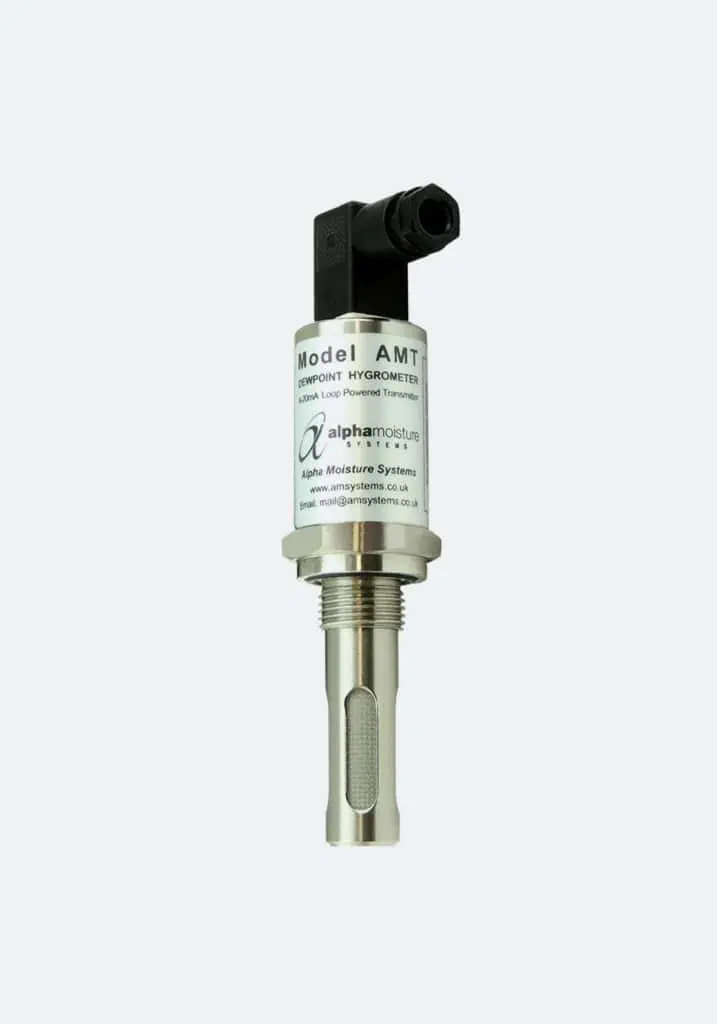
Trace Moisture Measurement in
Air Separation Units (ASU’s)
Application Note
Air Separation Units (ASUs) are critical in industries that require high-purity gases such as oxygen, nitrogen, and argon. Accurate dewpoint measurement plays a vital role in ensuring the efficiency, safety, and reliability of these units. This application note outlines the significance of dewpoint monitoring in ASUs, common moisture-related challenges, practical solutions, and references to key standards.
What are Air Separation Units? (ASU’s)
ASUs are industrial plants designed to separate atmospheric air into its primary components—nitrogen, oxygen, and argon—using cryogenic distillation or non-cryogenic methods. These gases are essential for applications in steel manufacturing, healthcare, electronics, and chemical processing.
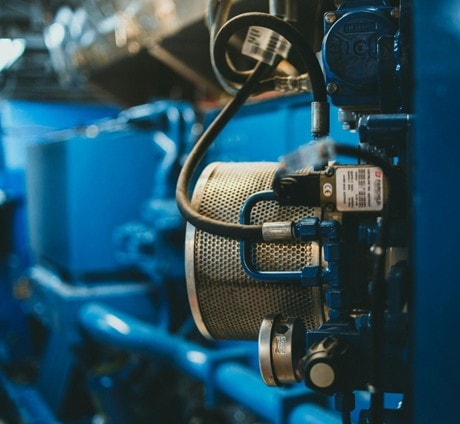
Key Functions of ASU’s:
Air is cooled to extremely low temperatures, liquefied, and then separated based on boiling points.
Techniques like pressure swing adsorption (PSA) or membrane separation are used for specific purity requirements.
How Does an Air Separation Unit Work?
The principle is simple: air is cooled to very low temperatures so it can be liquefied and then separated based on boiling points.
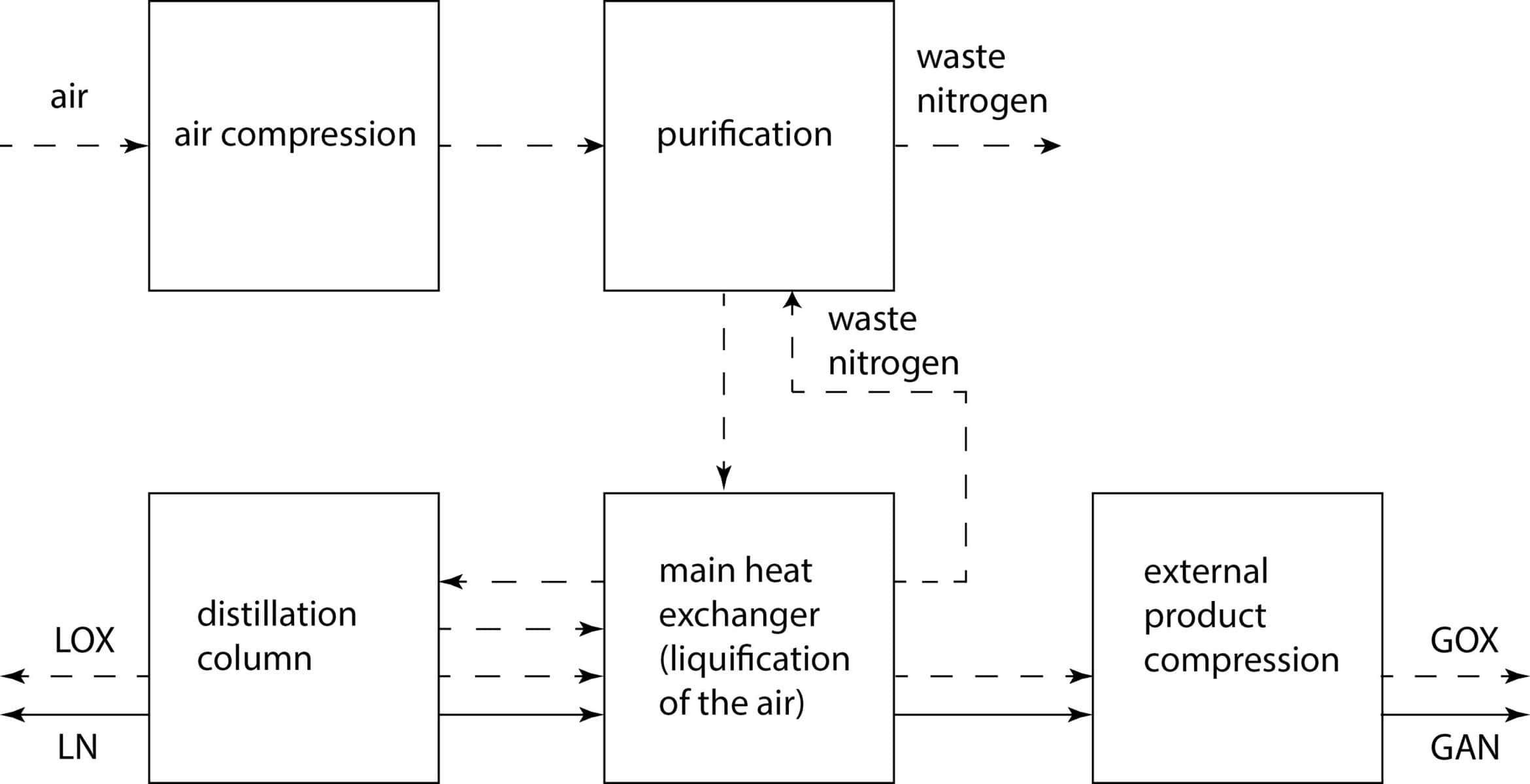
Step-by-Step ASU Process
Compression: In this stage, atmospheric air is drawn into the ASU and passed through a series of compressors to increase its pressure. The purpose is to make the subsequent cooling and separation processes more efficient, with typical pressure ranges going between 5 and 10 bar gauge.
Purification: Before further processing, the compressed air is typically purified to remove impurities (including moisture, carbon dioxide, or trace contaminants). This step ensures that the separated gases are of high purity and avoids issues such as the freezing or plugging of the cryogenic equipment.
Cooling: The now purified, compressed air is cooled down to cryogenic temperatures using a series of heat exchangers and refrigeration cycles. This results in liquefying the air, as cryogenic distillation relies on the differences in boiling points of the various components.
Separation: The now cold, liquefied air is fed into a distillation column (or a series of distillation columns), so that the air is separated into its primary components based on differences in boiling points:
- Nitrogen has a boiling point of -196°C (-321°F)
- Oxygen boils at -183°C (-297°F)
- Argon, if being separated, has an even lower boiling point (-186°C or -303°F).

Collection, storage and delivery: the separated gases are collected and sent to storage tanks, either pressurised tanks or cryogenic tanks. From there, the gases can then be distributed and supplied to various industries and applications, depending on their purity requirements.
This fractional distillation process is what makes ASUs so efficient for industrial gas production.
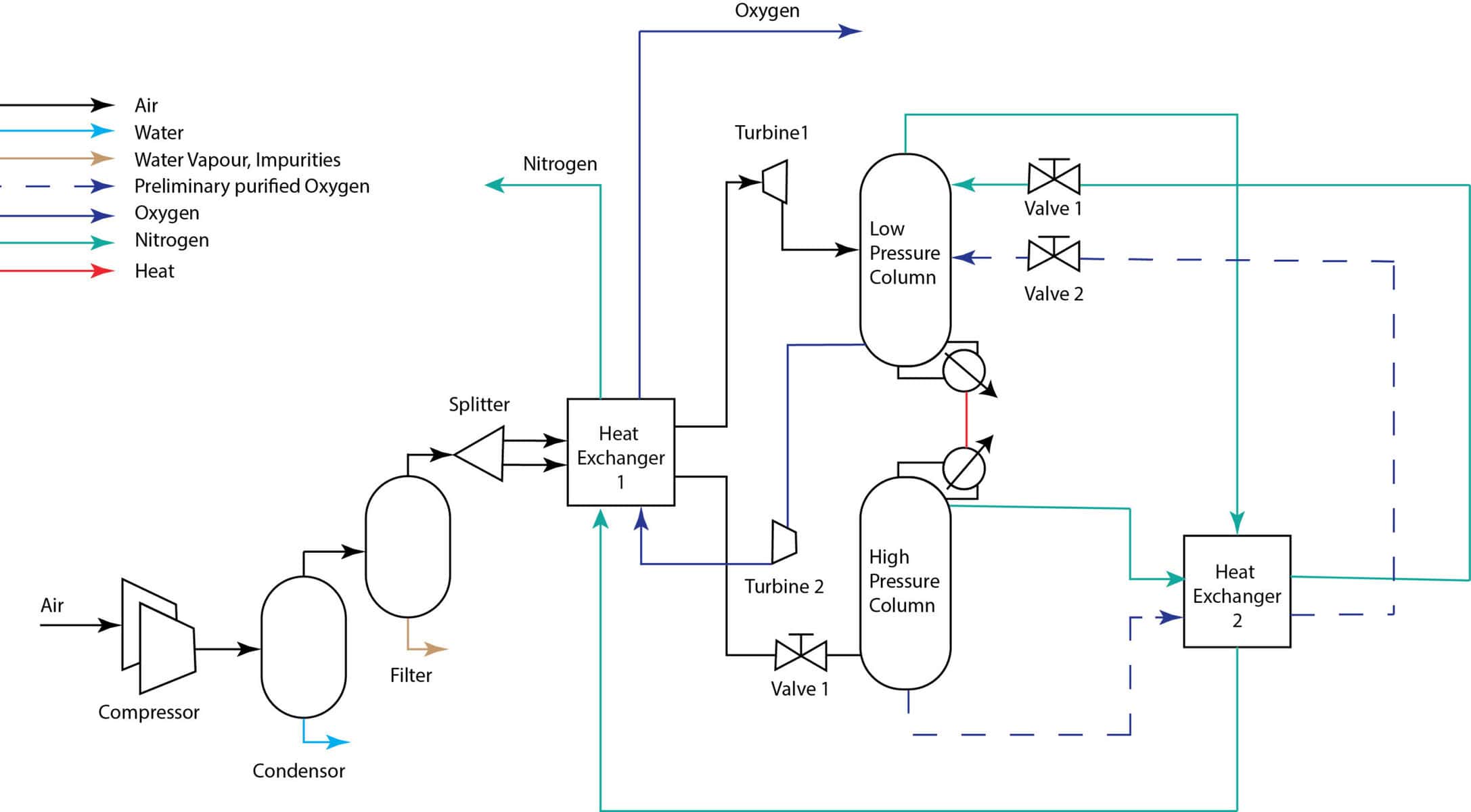
Moisture Problems in Air Separation Units
- Freezing Blockages: Water vapour can freeze at cryogenic temperatures, leading to blockages in heat exchangers and distillation columns.
- Corrosion: Moisture accelerates corrosion of internal components, reducing equipment lifespan.
- Product Purity: Excess moisture compromises the purity of separated gases, affecting downstream processes and product quality.
- Safety Risks: Ice formation can cause pressure build-up, increasing the risk of equipment failure.
Importance of Dewpoint Measurement
- Preventing Ice Formation: Ensures moisture levels remain below thresholds where freezing can occur.
- Maintaining Product Quality: Guarantees that delivered gases meet stringent purity specifications.
- Optimising Maintenance: Early detection of moisture ingress allows for proactive maintenance, reducing downtime.
- Ensuring Compliance: Helps meet industry standards for gas purity and process safety.
Solutions: Trace Moisture Measurement
Effective moisture management in ASUs involves:
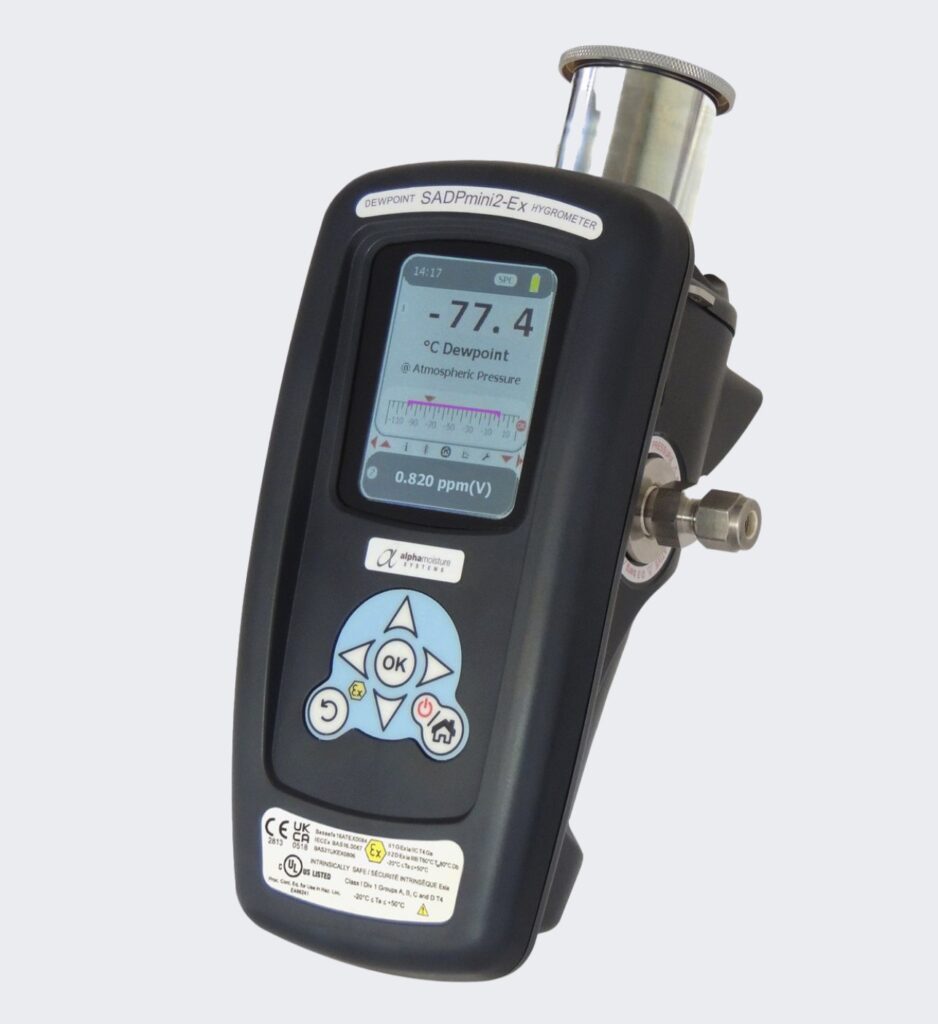
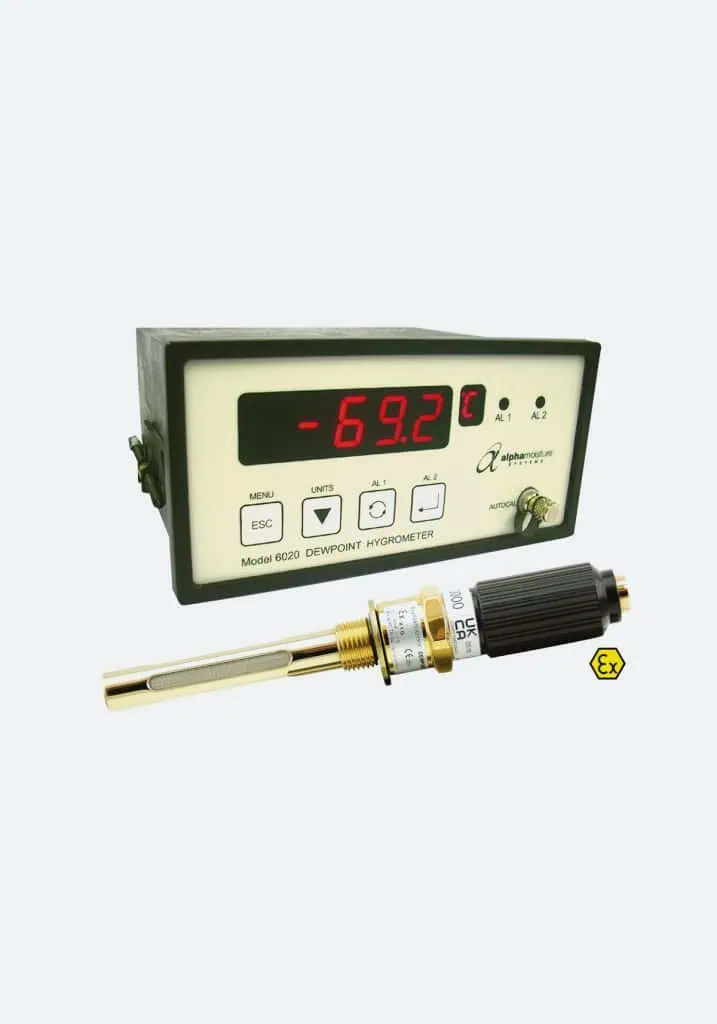
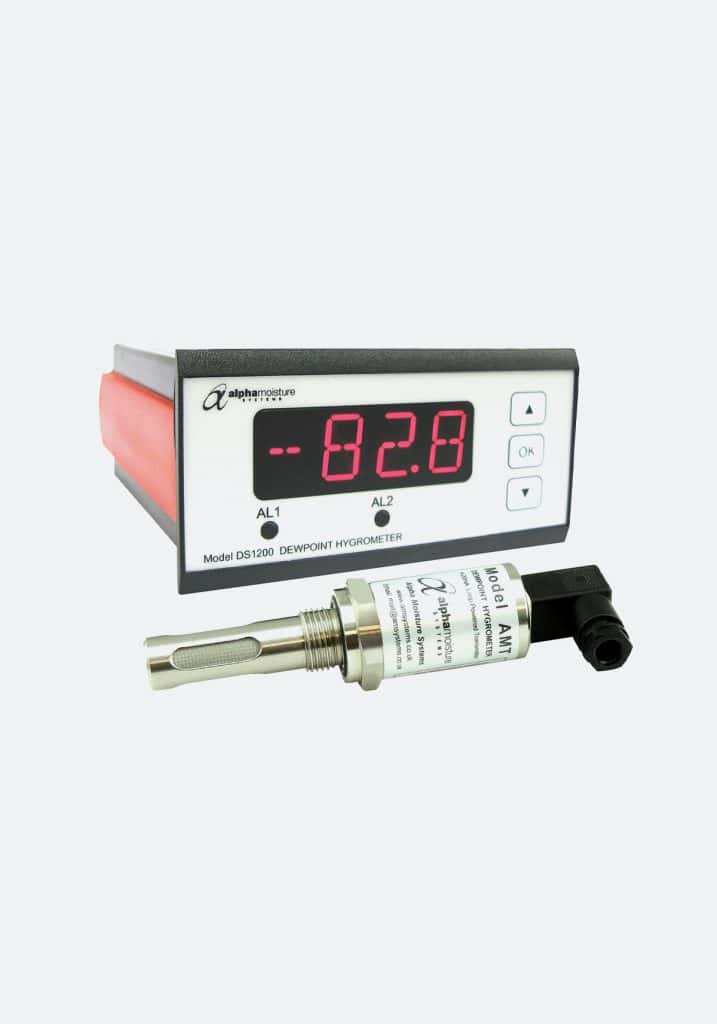
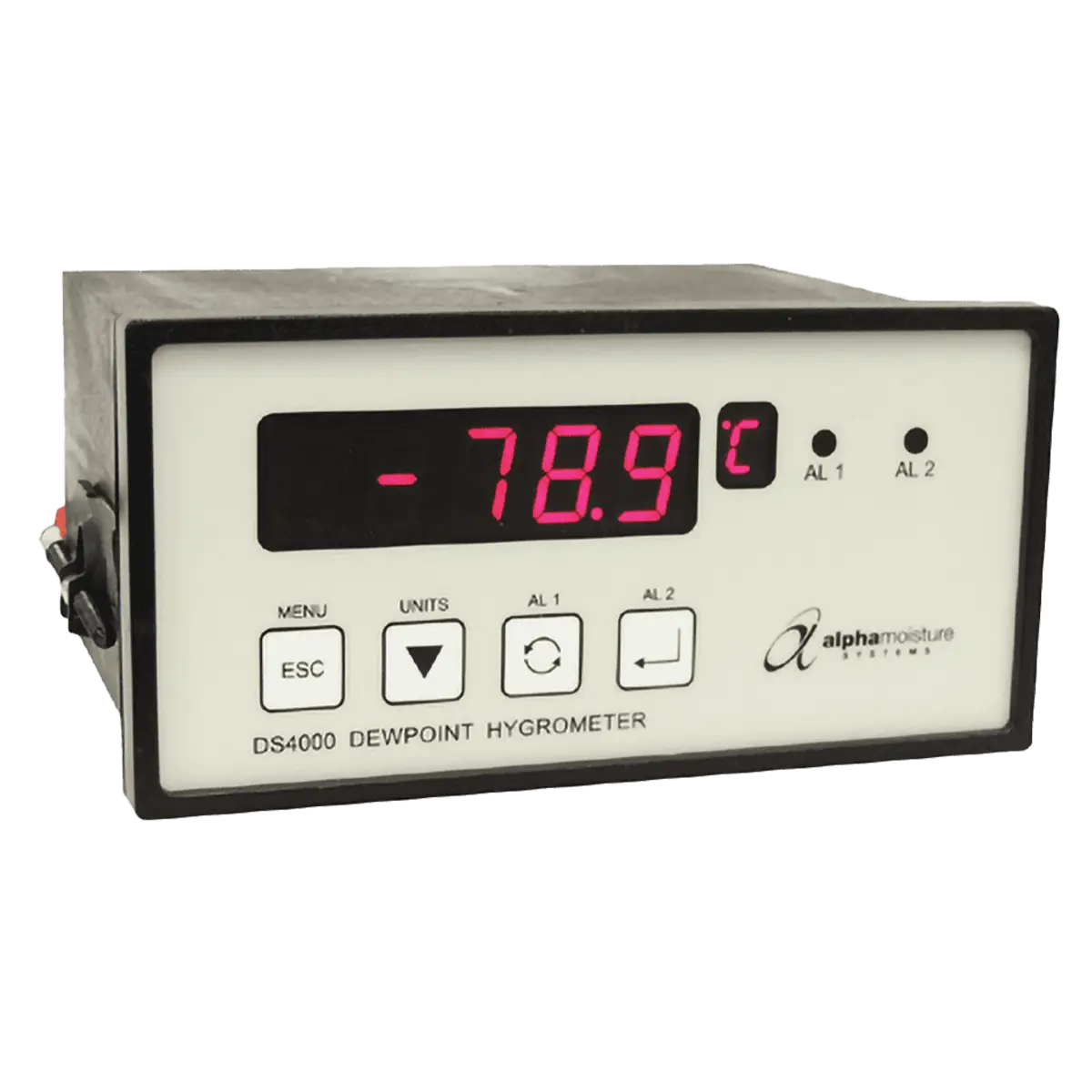
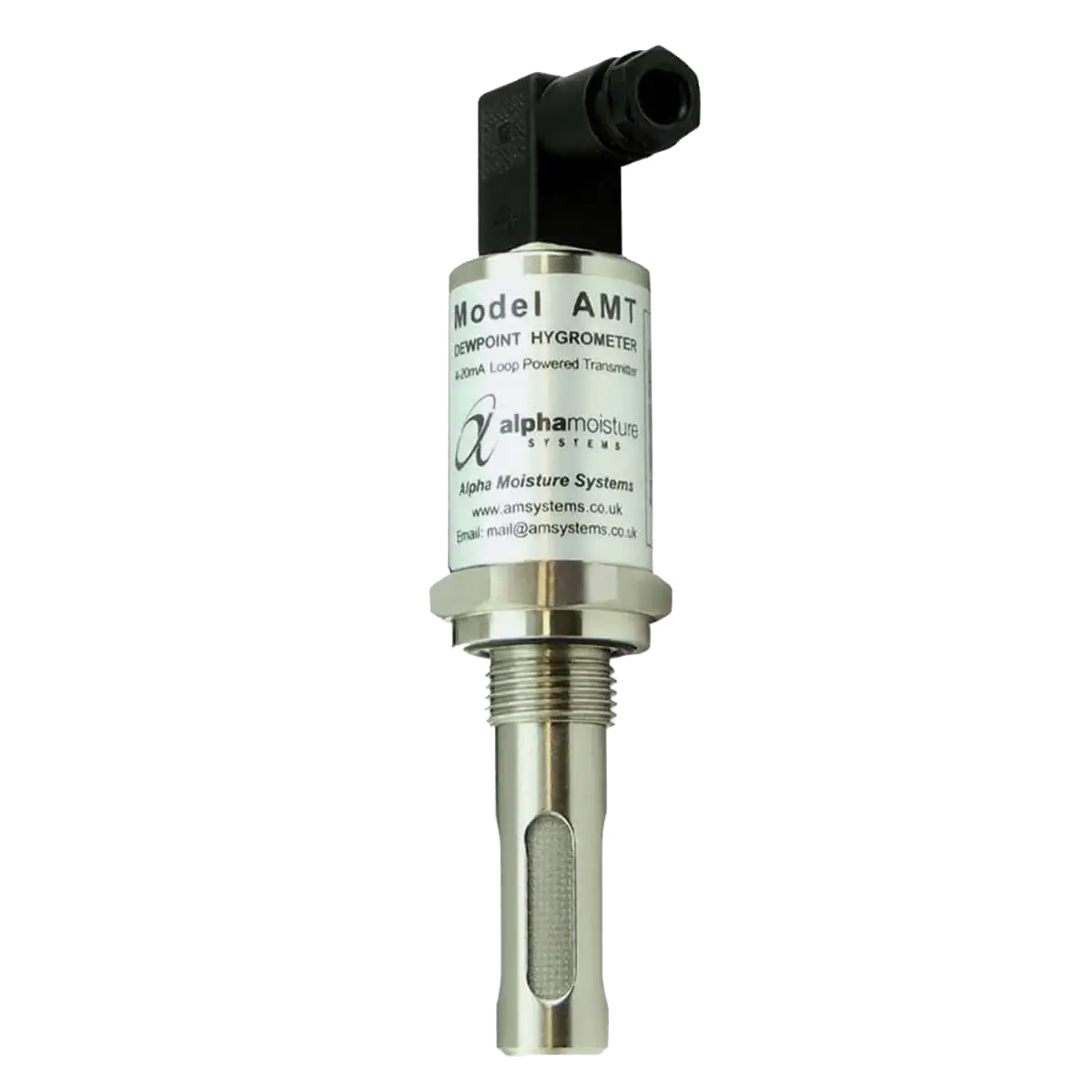
- High-Precision Dewpoint Sensors: Install sensors at critical points such as after air compression and drying stages, for effective real-time monitoring.
- Regular Calibration: Maintain sensor accuracy through scheduled calibration and maintenance.
- Alarm Systems: Integrate alarms to alert operators when dewpoint thresholds are exceeded.
Reference Standards
ISO 8573-1: Compressed air quality standards, including moisture content.
ASTM D5464: Standard test method for moisture in gases.
IEC 61207-1: Performance evaluation of analysers for industrial process control.